
This piece encapsulates the feeling of a quiet surrender that emerges in moments of darkness and uncertainty.
A car sinks into the depths of the ocean, carrying a bear who has been trapped in its descent for what appears to be a long time. Surrounded by the remains of countless cigarettes, the bear rests against the roof of the car, no longer fighting against his fate but quietly accepting the uncertainty of what comes next.
Above him, the moon glows behind clouds that slowly transform into waves, blurring the boundary between the sky and the ocean. This distortion represents the bear’s growing sense of disorientation as he becomes consumed by the darkness around him.
Yet, despite its descent, the car is still on. Its headlights remain illuminated, casting beams of light into the unknown depths below. These lights symbolize a lingering sense of hope, the idea that even when someone feels lost, there is still a small part that continues to search for a way forward.
The piece reflects on the tension between surrender and perseverance: the moment when we accept that we cannot control everything, while still holding onto the possibility that something brighter may exist beyond what we can see.
Sinking
"Sinking"
Michelle Johnston
May 2026
Acrylic on canvas
12 x 16 inches
My Proccess


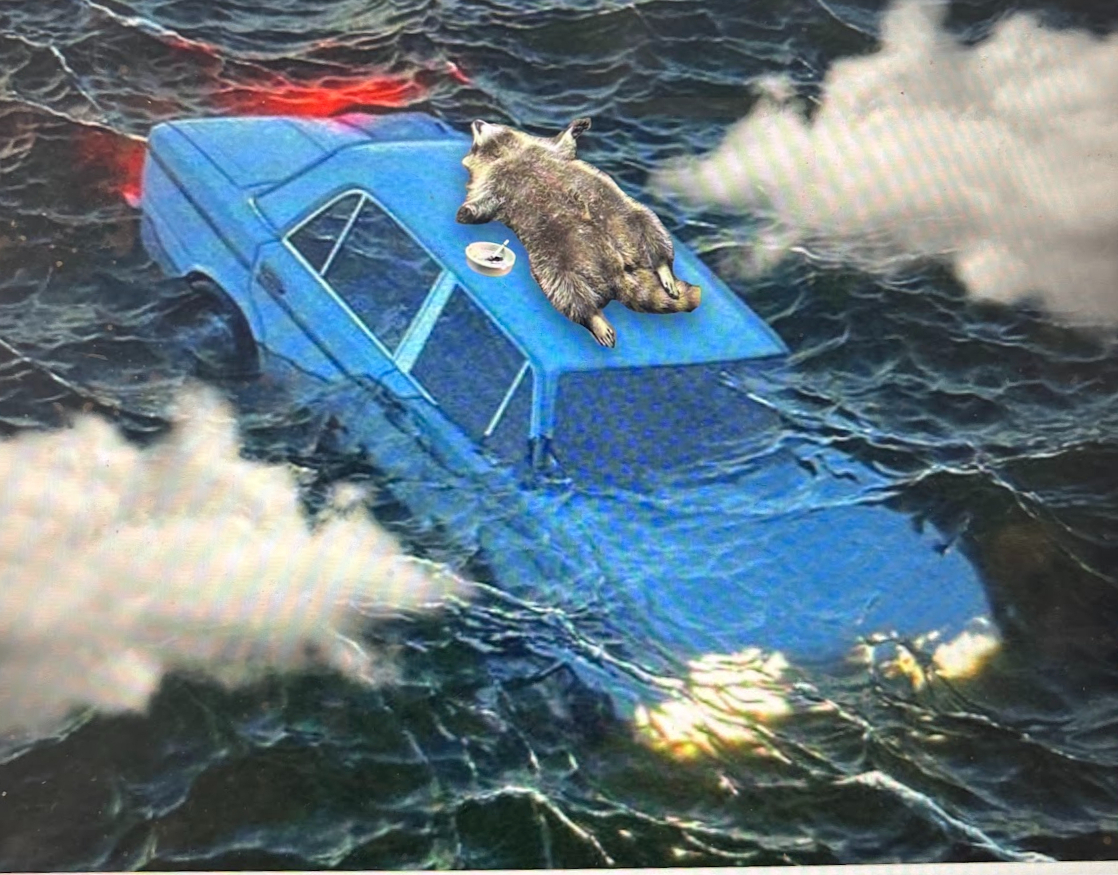
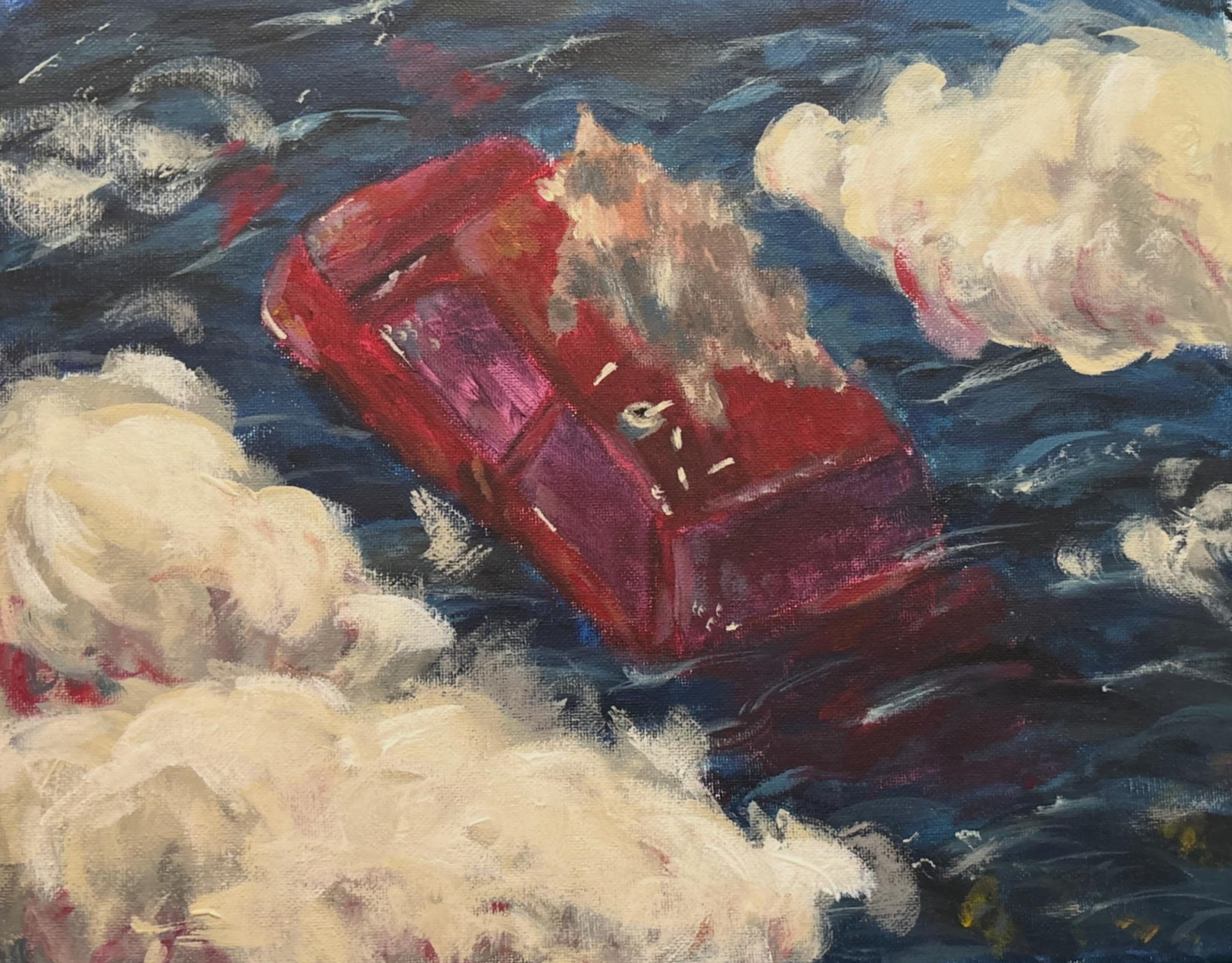
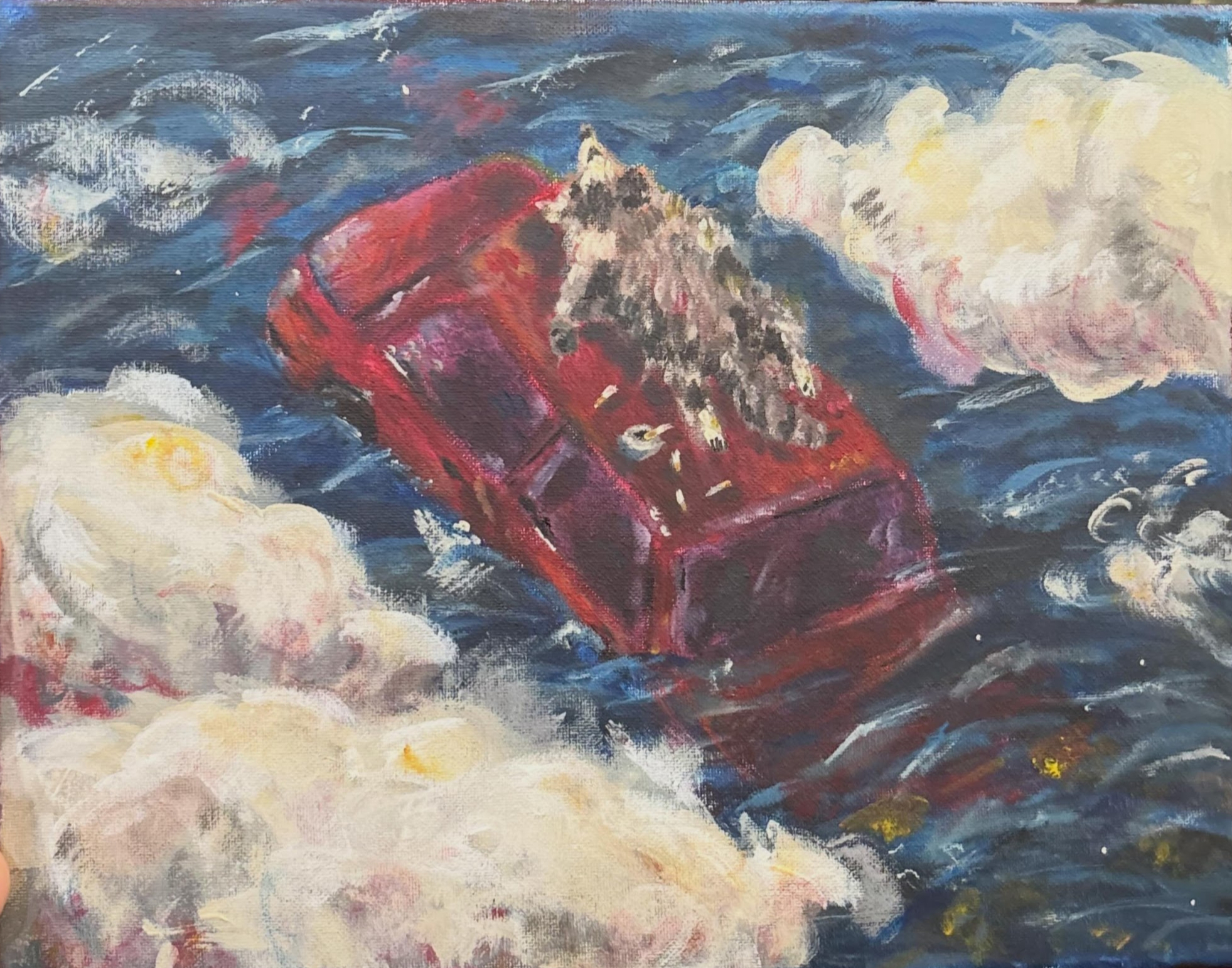
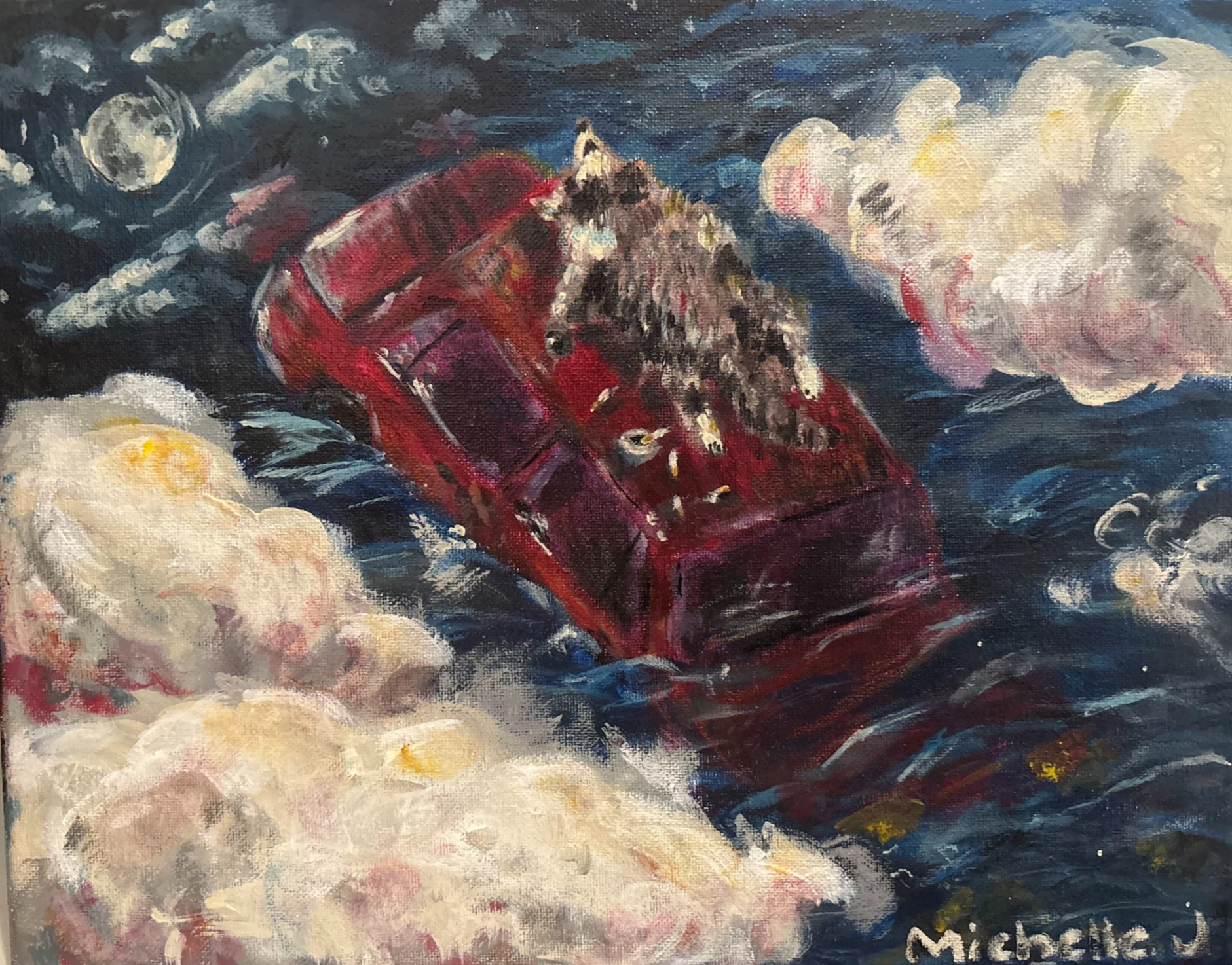
The idea for this piece came from a dream I had about my brother. In the dream, I saw him trapped inside a sinking car, drowning, and I was unable to reach him. The feeling of helplessness and something happening beyond my control gave me the original inspiration for this piece.
Oddly enough, I was also inspired by the story of Amelia Earhart and the mystery surrounding her final moments. I'm not sure what made me think of her, but I found myself imagining the quietness of when she was stranded at sea. Her engine gone, communication lost, and the world slowly becoming submerged. I pictured her sitting on the roof of the aircraft, looking upward and accepting a fate she could no longer change. This image, of course, became the focal point for my piece.
Many of my works use animals rather than human figures because I find this creates more symbolism and allows for different interpretations of my artwork. Originally, the figure resting on the car was going to be a raccoon, but as the piece became increasingly connected to my own experiences, I felt that a bear better represented the feeling I was trying to capture. Bears carry the weight of both strength and protectiveness, but are also very solitary and vulnerable creatures, which felt better aligned with my relationship with my brother.
To begin the process, I created a digital collage using various reference images to build the composition. I chose a red car to contrast against the surrounding blues of the ocean and sky, creating a strong focal point within the vastness of the scene. While creating this image, I was inspired by artists like Small White Monster, whose work often incorporates cigarettes as a recurring visual element. I was drawn to how the presence of discarded cigarettes can communicate the passage of time and add another layer of storytelling.
The making of this painting was very emotionally demanding. I painted continuously for two days and two nights, finishing it shortly before my brother’s birthday. Because so much of the inspiration came from him, I felt that the piece was meant to become a gift for him.
While painting, I experienced the uncertainty that often comes with creating. I find that painting can feel like creating a problem before finding the solution. You start by putting everything onto the canvas, and for a while it feels chaotic and unfinished. I read once that creating art is like cleaning out a closet: you have to take everything out first, making the mess seem even bigger, before you can begin organizing it into something meaningful. In my experience, this can be a very exhausting process.
There were many moments when I doubted the direction of the painting. I questioned whether I could capture the image I had envisioned, whether my skills were enough, and whether the final piece would communicate what I wanted it to. I repeatedly returned to the canvas, making small changes and adjustments, including the ultimate decision to replace the raccoon with the bear. I varnished and reworked the painting several times, constantly balancing whether I was adding something meaningful or simply overworking it.
In the end, the process became a lesson in trusting the journey of creating. What began as an uncertain collection of ideas slowly transformed into something deeply personal. I created something that captured not only the image I had imagined, but also the emotions that inspired it. It became a piece I was proud of, and one I was excited to share with my brother.